(800) 823-4937
 sales@northernhydraulics.net
How to Measure Gear Pump For a Replacement
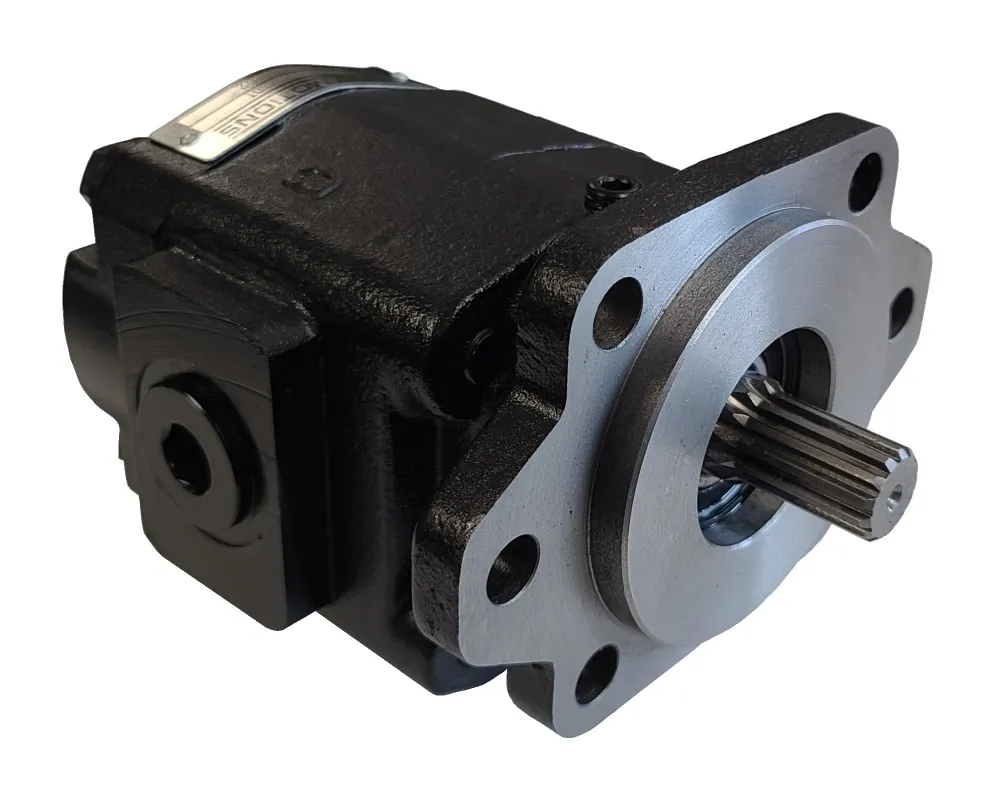
When replacing simple gear pumps that are either obsolete or of an unknown manufacturer, there are several factors to consider. Please be ready to supply the following information below so one of our Hydraulic Specialists can assist you in locating a possible replacement. It may be necessary to know the intended application of the pump, as the potential side loading of a pump can determine whether a bushing or bearing pump should be used.
January 9, 2024
Sizing Up Simple Gear Pumps:
Please review the individual categories below for further explanation and identification.
Have a part number or specs? We’ll confirm the fit and quote it.
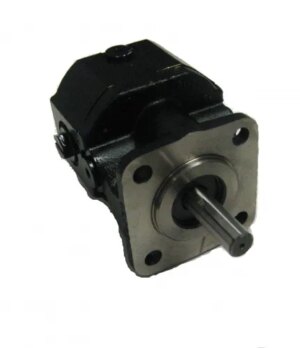
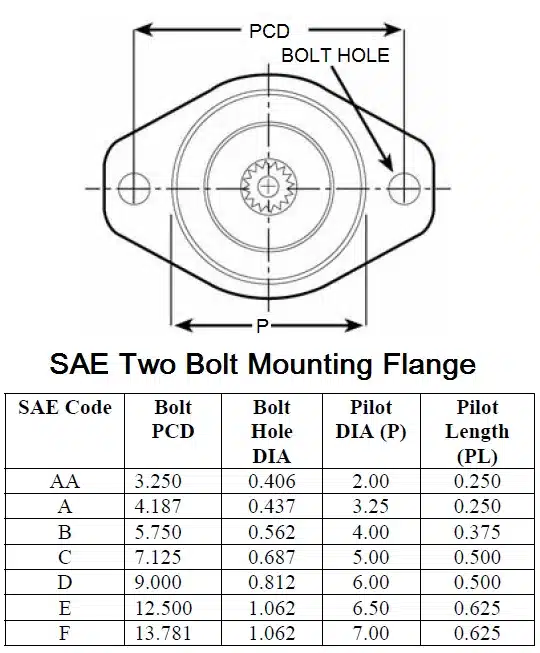
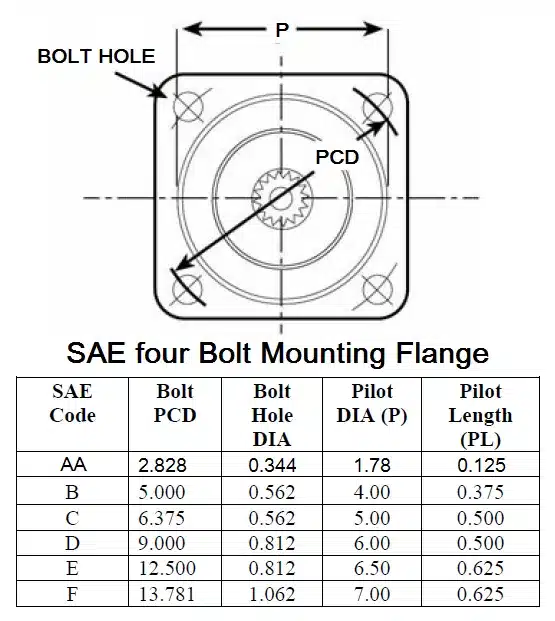
Mounting Flange
Common bolting patterns used in North America use either 2-bolt or 4-bolt mounts. They come in many various sizes and can be identified using the charts below.
Shaft Type and Length
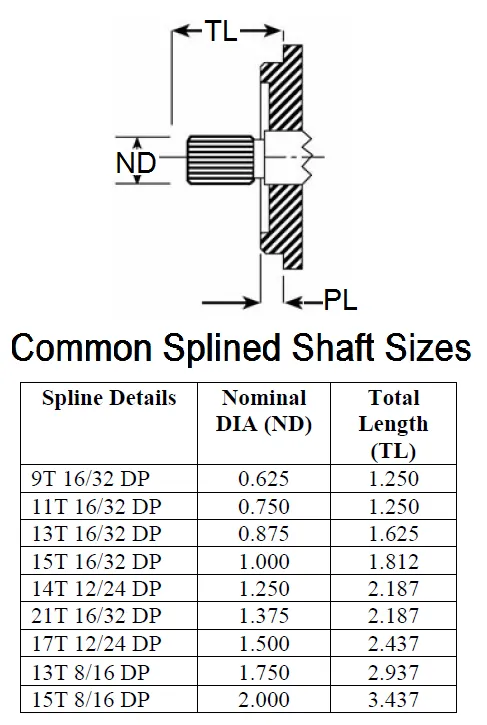
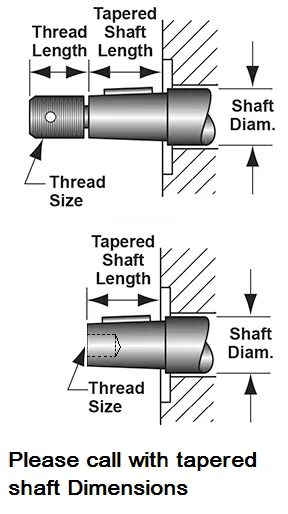
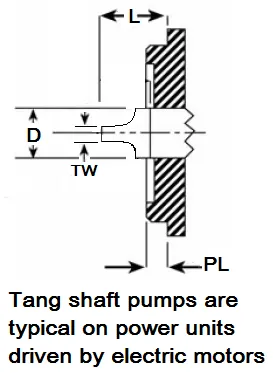
Common pump shafts used in North America usually fall within four categories: keyed, splined, tapered, or tang. Keyed and spline shafts come in many various sizes and lengths; the most common shafts may be identified using the charts below. Tapered and tang drive shafts are typically application-specific; please supply the information from the corresponding figures below.

Pump Rotation
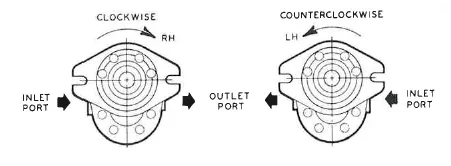
Pump rotation is always determined with the pump input shaft facing towards the user with the belly of the pump facing down. Gear pumps will have a shaft that is located in the center of the mounting flange that is directly connected to a gear. This gear, in turn, drives the accompanying gear residing in the “belly” portion of the pump.
Porting
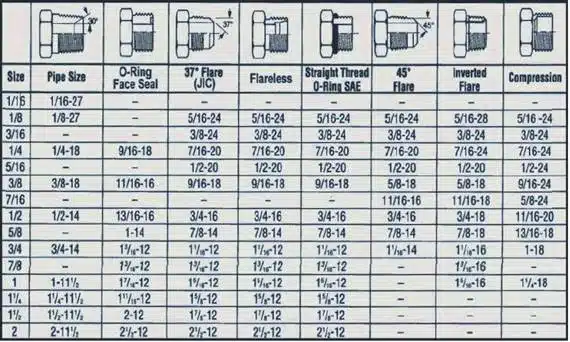
In a simple gear pump circuit, only two lines connect to the pump. They supply oil from the reservoir and send the pressure to the system. There are a myriad of hydraulic fitting thread types and sizes. The three most common fitting types that we see used on pumps in the North American market are NPT, SAE O-ring Boss, and SAE O-ring Flange.
NPT stands for National Pipe Taper. Pipe sizes are determined by the inside diameter of the pipe, resulting in the thread size being nominally larger. For example, the outside thread dimension of a ½” NPT fitting actually measures closer to ¾.” The NPT fittings are narrower on one end vs the other. This allows the fitting to “tighten” as the fitting is threaded in. There is a critical difference in pressure ratings between hydraulic-rated NPT fittings and those designed for the plumbing and gas industries. Even though they share the same thread dimensions, plumbing fittings should never be used in hydraulics. Pipe thread seals by the galling of the surface between the metal threads. That is why you should only use a recommended Teflon Paste when using NPT fittings in hydraulics. The paste acts as a lubricant, allowing the fitting to make a tighter, more efficient seal. The use of pipe tape is strongly discouraged for hydraulic systems.
SAE O-ring Boss straight thread fittings seal with an o-ring at the base of the fitting. The inside diameter determines the fitting’s sizes, making the thread size nominally larger. For example, the outside thread dimension of a #6 SAE fitting actually measures 9/16” outside diameter with 18 threads per inch. Most modern hydraulic gear pumps are now using the SAE O-ring boss fittings as they have proven to suffer fewer failure rates for leakage. Some of the most common fitting sizes and types are listed in the chart below:
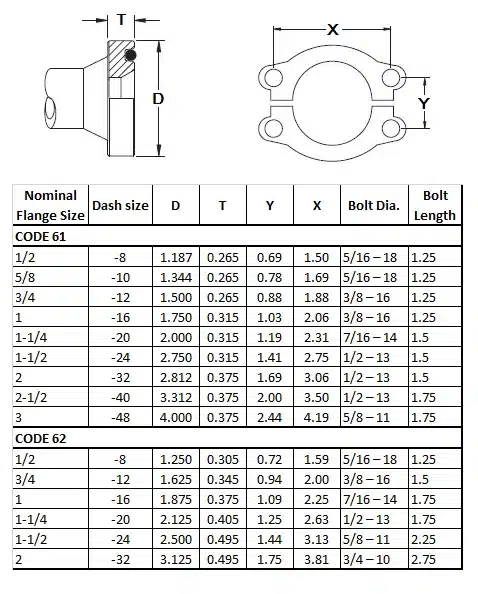
The male connector SAE O-ring Flange, Code 61 and Code 62, has a flanged head with an O-ring groove machined into the face. The female side typically has a smooth face to accept the O Ring and four threaded bolt holes in a rectangular shape. The fittings are secured using a flange clamp (one or two pieces) fit over the male flange head and secured to the female side using the four bolts. This compresses the O-ring, creating a seal between the male flange and the female port face. Two common series of this type of fitting are referred to as either Code 61 or Code 62. Please see the chart below for identification.
Porting location on gear pumps usually comes in either the side or the rear of the pump. There are some replacement pumps that include both side and rear ports. Only one inlet and one outlet should be used. The unused port will need to be blocked off with a hydraulically rated-plug.
Displacement
The volume of oil that the Gear pump can flow is determined by the pump displacement and the speed at which it is rotated. Displacement is typically given in cubic inches per revolution or cubic centimeters per revolution.
To determine the unknown displacement of a pump, it is necessary to disassemble it to take internal measurements. You will need to measure the outside diameter of one of the gears, the height or thickness of the gear, and the distance from the center to the center of the two gears as they are mounted into the pump housing. Below is a guide with the formula required to determine the displacement.
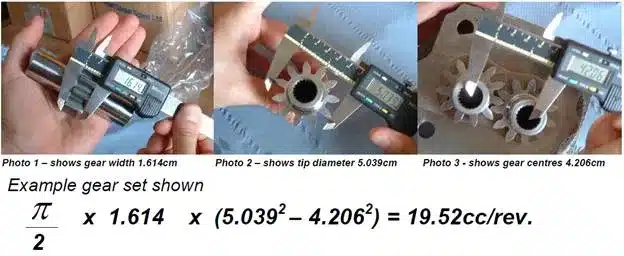
You can determine the flow rate by using the displacement volume times the revolutions per minute divided by a constant determined by your desired unit of measure. You can find a calculator available to assist with this function HERE.
Pressure
It is typically rated in pounds per square inch (psi) or BAR within the hydraulic industry. Ensuring the pump that you are selecting as a replacement is rated for the pressure your system will require is a critical yet often overlooked step. The acceptable working pressure will decrease as the displacement goes up within a particular frame size. Changing to a larger frame size may be necessary to avoid excessive strain on the pump, causing premature wear. Remember, there is typically a reason that your original pump failed. Gear pumps can be rated from very low pressure for fluid transfer applications to over 4000psi in high-pressure industrial environments.
Shaft Speed
As the displacement goes up within a particular frame size, the maximum revolutions per minute (RPM) will decrease. Changing to a larger frame size may be necessary to avoid excessive strain on the pump, causing premature wear. Remember, there is typically a reason that your original pump failed. Gear pumps typically need a minimum RPM to function efficiently as well. Changing the rpm range in which the pump is driven may be necessary to achieve the required efficiency. Changing gear, sprocket, or pulley diameter might be possible if the pump is not directly driven. The potential side loading of a pump may change. Anticipated side load may determine whether a bushing or bearing pump may be necessary.